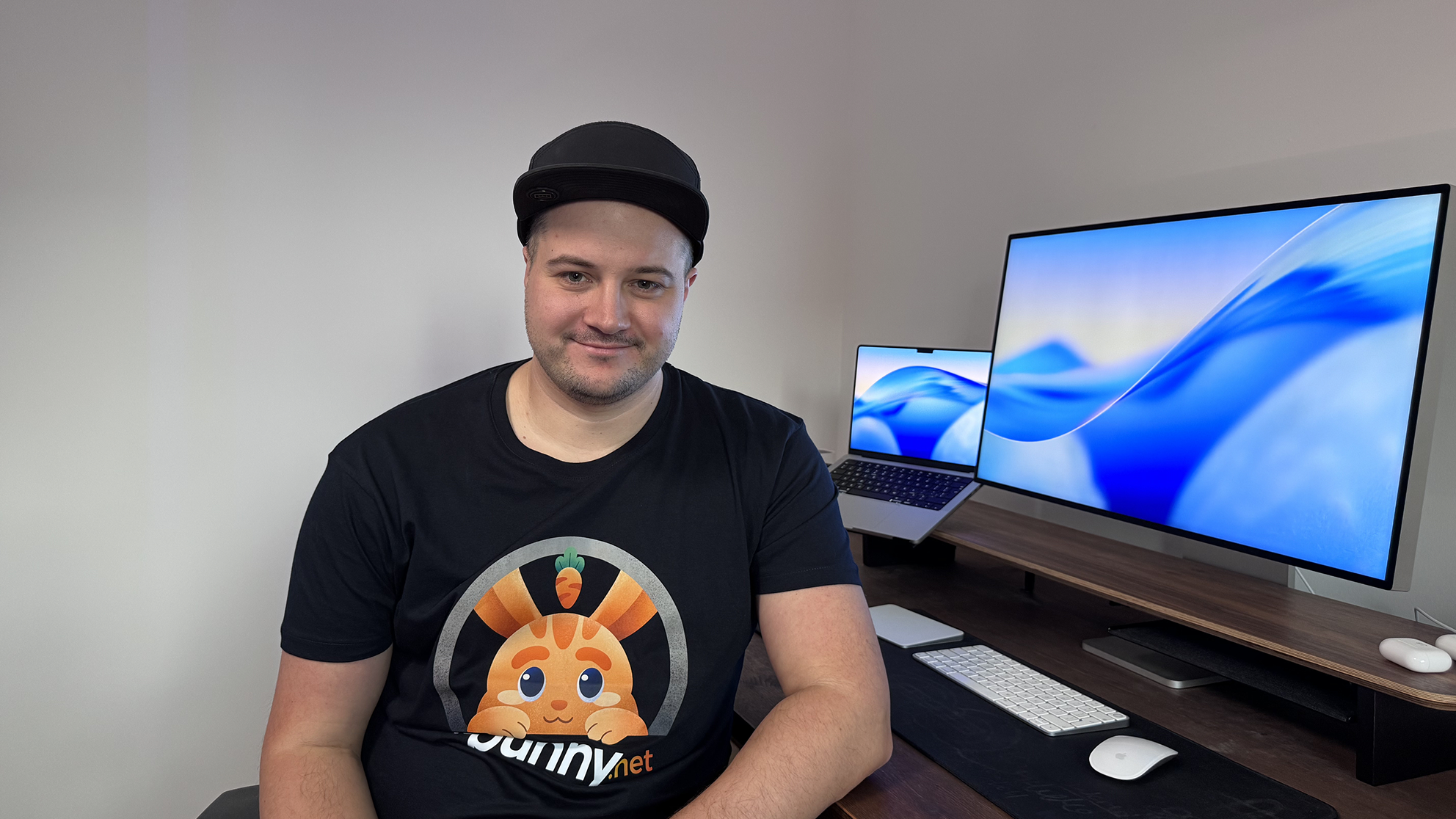
Jamie on DX: The product is the experience

Nina Ratkajec

December 16, 2025
Long before Developer Experience had a name, Jamie was already doing the work. He started out building web apps as a teenager, and later found himself creating the internal tools that keep big platforms running. Through all of it, he’s really been chasing the same thing: making it easier and more fun for builders to ship.
What we’ve always cared about most is making complex tools feel simple and powerful. As our first DX Engineer, Jamie is here to help us scale that.
A few weeks into his new role, we caught up with him to discuss his approach to Developer Experience, why he chose bunny.net, and what it takes to design for speed, joy, and frictionless flow.
Q: Every dev has a story. What’s yours, and what led you into the world of DX?
“I’ve spent most of my career in startups, and like all startups, they’re chasing product-market fit. You’ve got to solve a real problem. The ones I’ve worked at have been all developer-focused: APIs, SDKs, dashboards, content, the whole ecosystem. And I’ve always liked getting stuck in and improving things.
Whether that’s building with the product, trying to use it, reading what others are saying, or just suggesting better workflows. I’ve always tried to make things easier, even before ‘DX’ was a term. I remember when I was just a software engineer, I was already focusing on internal tools and docs, making sure whatever we built was easy to use internally. Now that same mindset applies to external APIs and platforms.”
Q: How do you personally define Developer Experience?
“It’s not just docs or SDKs in isolation, it’s the full journey: from discovering a product to deploying it. Like, you’re on Twitter or Reddit, and you see someone built something cool using bunny.net products. You think, ‘Wow, I want to do that.’ Great DX is what makes that possible. Going from that spark of interest to ‘I just deployed something,’ without getting stuck.”
Q: Isn’t DX just DevRel?
“They’re definitely related, but not the same. DX is about the product: the API design, SDKs, docs, onboarding flows, error messages, all of that.
DevRel is about the relationship between the company and the community. It’s more outward-facing: meetups, content, Discord, bringing feedback back in. But it all relies on the product being great.
You can have the best speakers and advocates, but if the product sucks, developers won’t stick around. DX is the foundation. DevRel amplifies it.”
Q: What drew you to bunny.net and this role in the first place?
“The breadth of the product stood out. It’s not just a CDN. There’s edge scripting, Magic Containers, storage, stream, a database coming… there’s just so much. I saw a huge amount of untapped potential.
I’ve worked on a lot of tools in the past: a headless CMS, a commerce platform, a database, which were all great, but they were just one tool in someone’s stack. bunny.net is different. It’s becoming a full platform. And that means there’s an opportunity to help shape the entire experience: from SDKs to tooling, docs to developer marketing, making sure everything makes sense and works together.
Plus, the team was super open to feedback. Not just for show. Genuinely open, as long as the evidence supports it. That kind of collaboration really matters.”
Q: What’s broken in most DX efforts today?
“A lot of companies treat DX as a veneer. Pretty landing pages, some SDKs, and docs. But the teams building the products don’t even use them themselves. That’s the problem.
The product has to make sense. Developers aren’t going to learn your entire platform just to figure out if it might work. You need to meet them where they are with the right SDKs, tools, and content that fit into their workflow.
It’s about bridging that gap. Building something isn’t enough, you have to build it in a way people want to use it.”
Q: How do you decide where to focus first?
“There’s so much to do. However, I thrive on context switching, and bouncing between ideas keeps me going. That said, you can’t forget the big picture.
Sometimes teams will build something and then throw it over to marketing. But if it’s not tested, if it doesn’t make sense to users, it won’t land. DX needs to be in mind from the start, not just reviewing things at the end.
Ideally, DX works side-by-side with the teams, making sure what’s built is actually usable and aligned with how developers think and work.”
Q: What do you think is changing in the developer tools space?
“There’s been this trend of abstracting away all the control. Platforms made it easy to deploy, but developers gave up a lot of flexibility. Now, there’s a pushback.
People are moving back to VPSs and self-hosted setups because they want that control. But that’s hard, as no one wants to be a networking expert.
bunny.net is in a great position to offer both: simplicity and power. That’s the challenge I’m excited about.”
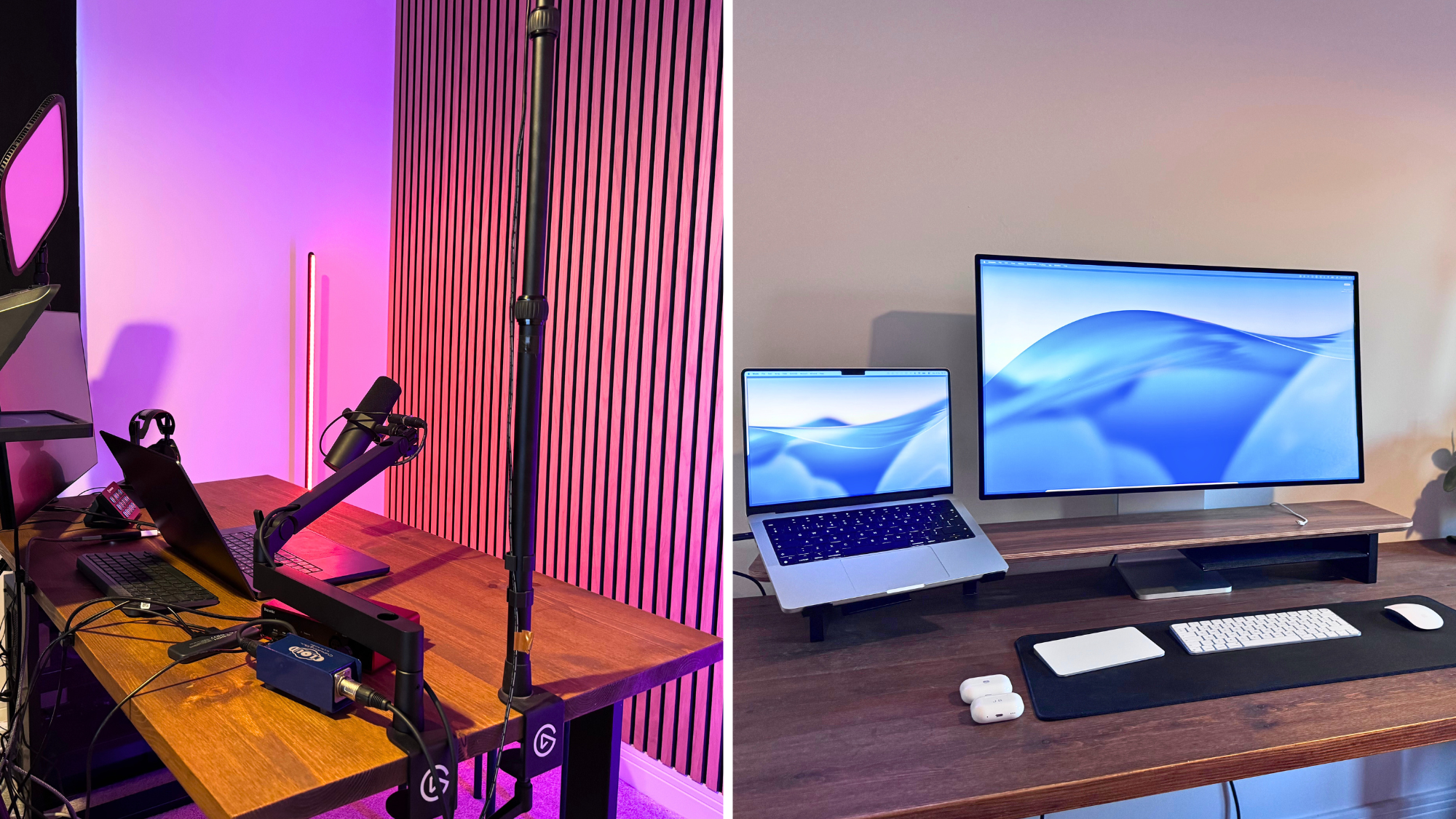
Q: What’s the one item on your desk you couldn’t live without?
“My Elgato Stream Deck. Press one button, and it turns the camera, mic, lights, everything on. I’ve got scripts to make sure my mic doesn’t default to AirPods. It’s all memory muscle now. Just makes things seamless.”
Q: What do you like to do outside of work?
“I’ve got two kids, so it’s a lot of family time. I’m into DIY, building stuff around the house or in the garden. I got into gardening this summer. Everything I planted died, but hey, I’ll try again next year.
I also do close-up card magic just for fun at family events or parties. And lately, I’ve been trying to get healthier after years of ignoring it.”
Q: What’s one fun or unexpected fact about you we should all know?
“When I was 15 or 16, I built an app called GoingOutfit. It let you share outfit photos with friends before going out, so you wouldn’t match. You could earn fashionista badges and everything.
I sold it on Fiverr. Maybe it could’ve been the next Instagram, who knows?”
Developer Experience has always been part of how we build
Developer Experience at bunny.net means more than fast APIs or clean docs. It means understanding how developers think and designing every layer of the platform to get out of their way.
Jamie’s here to help us scale that principle, not as a feature, but as a foundation.
Because the product is the experience and great experiences move the internet forward.